

As we witness the transformative shift toward sustainable mobility, India's electric vehicle (EV) landscape is accelerating at an unprecedented pace. At the forefront of this evolution, companies like ours are committed to building the backbone of this green revolution through innovative electric vehicle station solutions.
The surge in India's EV market, the pivotal role of government initiatives, our contributions as EV charging manufacturers in India to infrastructure deployment, key adoption metrics, and the hurdles we must navigate to ensure seamless growth.
India's Booming EV Market and Empowering Government Policies
India's embrace of electric mobility is not just a trend—it's a strategic imperative driven by environmental needs, energy security, and economic opportunities. The country's EV sector has evolved from niche experimentation to a robust market, fueled by ambitious national goals and targeted incentives.
A Snapshot of Market Growth
the Indian EV market reached an estimated value of $54.41 billion in 2025, more than doubling from previous years and poised to climb to $110.7 billion by 2029 at a compound annual growth rate (CAGR) of over 19%. This expansion reflects a broader automotive shift: wholesale passenger vehicle sales hit 2.9 million units in the first half of 2025 alone, with EVs capturing a growing slice of the pie. Cumulative EV sales from January to August 2025 surpassed 1.439 million units, marking a 16.5% year-on-year increase compared to 1.234 million in the same period of 2024.
Production figures underscore this momentum. We project that battery-powered passenger vehicle output will soar by 140.2% year-over-year to approximately 301,400 units in 2025, signaling robust domestic manufacturing capabilities. Two-wheelers and three-wheelers dominate current adoption, but four-wheelers are gaining traction, with electric car sales approaching 100,000 units—or 2% of total sales—in 2024, inching up to 3% in the first half of 2025. By 2030, the overall EV market is forecasted to reach $23.52 billion, growing at a 28.52% CAGR from 2025 onward, driven by falling battery costs and rising consumer awareness.
The FAME India Scheme: Catalyzing Adoption
Our Contributions as EV Charging Manufacturers in India
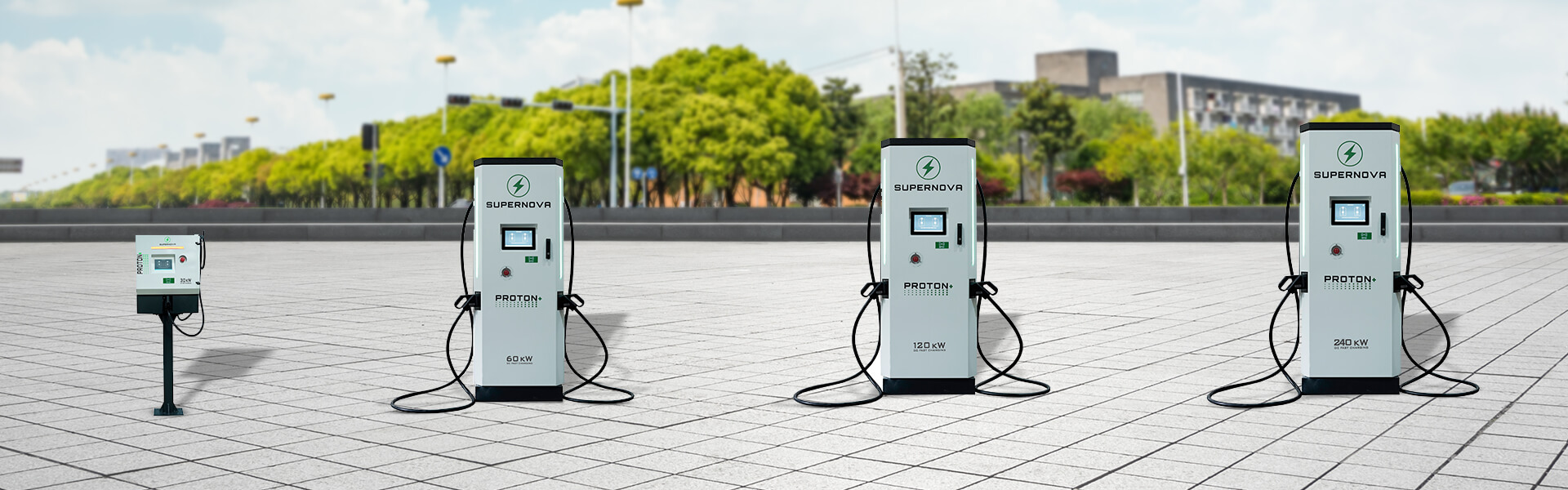
We are proud to play a vital role in this infrastructure buildup. As one of the leading EV charging manufacturers in India, we specialize in designing, developing, and deploying charging stations for EV cars tailored for Indian conditions. Our Proton+ series, for instance, offers robust DC fast chargers ideal for homes, businesses, and highways, ensuring reliable performance even in diverse terrains.
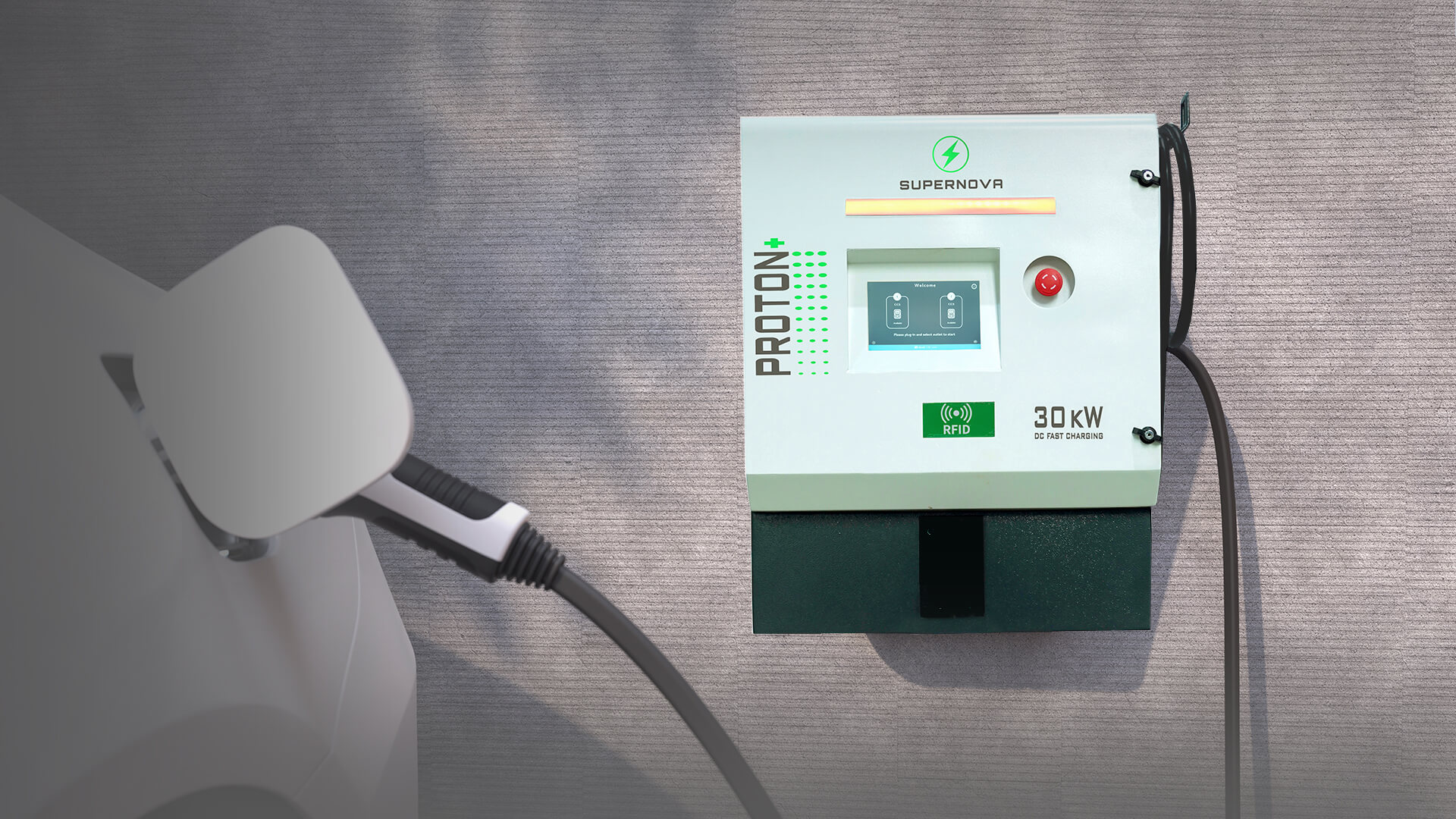
From urban hubs like Pune, Bangalore, Mumbai and Delhi to emerging corridors in Gujarat, our electric vehicle station installations span thousands of sites, supporting seamless EV integration. By partnering with fleet operators and municipalities, we enable scalable networks that align with national targets. This hands-on involvement not only accelerates deployment but also fosters innovation, such as modular setups for quick scalability and integration with renewable energy sources.
EV Adoption Rates and Projected Infrastructure Surge
Adoption metrics paint an optimistic picture, yet underscore the need for parallel infrastructure growth. In FY 2024-25, electric buses saw Tata Motors leading with significant market share gains, while overall two- and three-wheeler EVs accounted for the bulk of sales. Nationally, EV penetration hovers at 3% for passenger vehicles in early 2025, but projections indicate a leap to 30% by 2030, contingent on expanded charging station for EV cars access.
On the infrastructure front, India boasts 26,367 public EV charging stations as of FY25, up from 25,202 at the end of 2024—a near doubling since March 2023. Concentrated in states like Karnataka (5,765 stations) and Maharashtra (3,728), these points alleviate urban range anxiety but highlight regional disparities.
Looking ahead, experts forecast a dramatic expansion: the International Energy Agency (IEA) envisions 375,000 public electric vehicle chargers by 2030 to support a 10 million EV fleet under stated policies. Broader estimates suggest up to 1.32 million stations nationwide to accommodate 50 million EVs by decade's end. The EV charging market itself is valued at $348.50 million in 2024, projected to hit $487.10 million by end-2025, with shipments of 179,000 units in 2024 alone. These figures emphasize the symbiotic relationship between vehicles on roads and plugs in the ground.
Tackling Key Challenges: Urban Planning and Grid Capacity
Despite the progress, scaling EV infrastructure demands addressing entrenched obstacles. We recognize that true sustainability requires proactive solutions to these pain points.
Urban Planning Hurdles
Cityscapes present a mosaic of opportunities and constraints. The patchy distribution of charging stations exacerbates range anxiety, particularly in densely populated areas where parking is premium real estate. Inadequate zoning and land acquisition slow deployments, while inconsistent standards across providers lead to interoperability issues. Rural and remote regions lag further, with fewer than 10% of stations outside metros, hindering equitable access.
To counter this, we advocate for integrated urban planning: leveraging public-private partnerships (PPPs) to embed chargers in smart city projects, multi-level parking, and highway rest stops. Policies granting infrastructure status to charging stations, as recommended by NITI Aayog, can streamline approvals and reduce costs.
Grid Capacity Constraints
India's power grid, already strained by peak demands, faces amplified pressure from EV charging loads. Unmanaged influx could overload transformers and exacerbate blackouts, especially during evening hours when charging peaks align with household usage. Limited visibility on load growth and high upfront costs for upgrades deter investments, with discoms citing uncertain returns.
Mitigation strategies include smart charging technologies that off-peak shift loads, vehicle-to-grid (V2G) integration for bidirectional flow, and renewable energy tie-ins to distribute demand. According to Bolt Earth, by 2030, grid enhancements could unlock 20-30% more capacity through microgrids and demand-response systems, ensuring resilience.
Key Recommendations
- Invest in AI-driven load management for dynamic pricing and scheduling.
- Expand GST rebates to 5% on charging station for EV cars equipment to lower barriers.
- Foster R&D for localized battery storage to buffer grid stress.
Charting a Charged Future
India's EV infrastructure odyssey is a testament to collective vision and execution. From FAME II's incentives propelling market maturity to our targeted deployments as EV charging manufacturers in India enabling everyday adoption, the pieces are aligning for a electrified tomorrow. Yet, as we scale, confronting urban and grid challenges head-on will define our success. With projected infrastructure tripling by 2030 and EVs reshaping commutes, we remain dedicated to powering this journey—sustainably, inclusively, and innovatively.
References:
- IEA:
https://www.iea.org/reports/global-ev-outlook-2025 - https://www.iea.org/reports/global-ev-outlook-2025/electric-vehicle-charging
- NITI Aayog:
https://niti.gov.in/sites/default/files/2025-08/Electric-Vehicles-WEB-LOW-Report.pdf - IMPRI:
https://www.impriindia.com/insights/analysis-of-indias-fame-scheme/ - PWOnlyIAS:
https://pwonlyias.com/fame-india-scheme/ - Chambers and Partners:
https://chambers.com/articles/evaluating-fame-ii-insights-and-road-ahead - Chambers and Partners:
https://chambers.com/articles/evaluating-fame-ii-insights-and-road-ahead - Pulse Energy:
https://pulseenergy.io/blog/evolving-ev-charging-infrastructure-in-india - IndoEN:
https://indoen.com/Stories/StoryDetails/powering-the-grid-the-impact-of-electric-vehicles-on-indias-energy-infrastructure - Bolt.Earth:
https://bolt.earth/blog/ev-charging-infrastructure-effect-on-mobility-india